In this blog post, I will talk about some pet names or names used to express affection in Spanish. These are pet names that I have heard Spanish-speaking “amantes” (lovers) from Latin America commonly use.
I am only including the most common names.In English, I can only think of a couple of commonly used pet names such as “honey,” and “sweetheart” but the Spanish language has countless commonly used pet names. Maybe this helps explain why “los latinos” are renowned as hot blooded, passionate and intense lovers. If you listen to music in Spanish you will hear the same commonly used pet names over and over again.
But before I start listing them, I want to comment on an email that I received and thought was very “chistoso” (funny) or “gracioso” (funny) — or as they say here in Colombia “muy charro” (very funny).
You may recall that in a recent blog post I said that I have been a big fan of pet names ever since I first saw a re-run of the Honeymooners with Ralph Kramden (Jackie Gleason) and he told his friend Ed Norton (Art Carney) that his wife Alice (Audrey Meadows) had given him the pet name “Buttercup.”
And Ed Norton replied “She used to call you little old Buttercup? Ha! Ha! You used to be a little cup of butter, and now you’re a big tub of Lard!”
Well someone sent me an email with a question of “nostalgia” (note that the word “nostalgia” is the same in both English and Spanish), her email said:
“Patrick, do you remember the pet name that Clair Huxtable (Phylicia Rashad) gave Cliff Huxtable (Bill Cosby), on the sitcom THE COSBY SHOW/NBC/1984-91? And do you remember the pet name that Ralph Kramden (Jackie Gleason) called Alice Kramden (Audrey Meadows) on THE HONEYMOONERS/CBS/1955-56?”
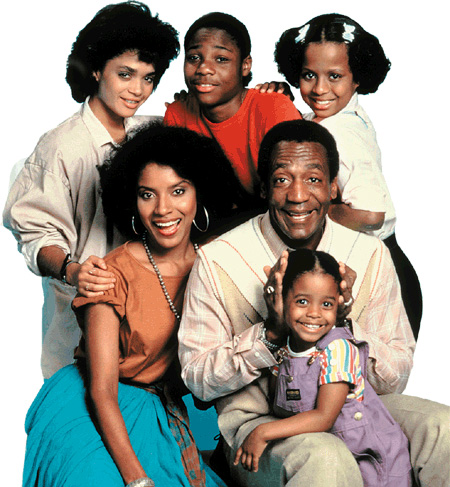
Well, I do have the answers. But I have to admit that “yo hice trampa.” (The phrase “hacer trampa” means to cheat, so “hice trampa” means “I cheated.”) I Googled the “preguntas” (questions) and found out that the “respuestas” (answers) are as follows:
1. Baby Cakes (Cliff Huxtable)
2. Bunny (Alice Kramden)
Enough of the “preguntas triviales” (triva questions).
Let’s talk about the names that Spanish-speaking “amantes” (lovers) use to express affection.
One thing that I noticed about the Spanish language is that you can take a name that is used to express affection and add “ito” or “ita” to the ending of the word to make it sound even more affectionate.
Depending on the last letter of the word, you may have to add “quito/quita,” “guito/guita” or “cito/cita” to make the word sound more affectionate.
The grammatical term for this class of words is called “diminutives.” Using diminutives is just a way of adding endearment or an expression of affection to a word.
Here’s a list that I have compiled of the most commonly used names that I have heard Spanish speakers from Latin America use to express affection. For many of them, I have also added the diminutive.
1. corazón, mi corazoncito – heart, my heart
2. príncipe/princesa/mi princesita – prince,
princess, mi princess3. mi rey/reina/mi reinita – my king, queen, my queen
4. cariño, mi cariño – caress, my caress
5. mi príncipe azul – my prince charming but literally
“my blue prince”6. tesoro/mi tesorito – treasure, my little treasure
7. amor/mi amor/mi amorcito – love, my love, my
little love8. mi morenito/mi morenita – my dark complexion one
9. mi paisita – my paisa (“Paisa” is a person from
Medellín, Colombia)10. mi gringuito – my gringo
11. mi amiguito – my dear friend
12. mi vida – my life
And diminutives are not reserved only for people. I have an “amiguita” here in Colombia who always refers to her dog as “mi animalito” or “my little animal.”
Although the “textbooks” will tell you that diminutives are only added to nouns, I have heard Spanish speakers add them to words that are not nouns in order to sound more affectionate. Por ejemplo (for example), “solo” becomes “solito”
Mi vida, me dejaste solito.
(My life, you left me all alone.)
And diminutives are not just reserved for “persons.” I have heard Spanish speakers throw them in any time that they want to sound more affectionate. Here are some examples:
“Mañana” becomes “mañanita”
Mi princesita, quiero verte esta mañanita.
My princess, I want to see you this morning.
“Carta” becomes “cartita”
Mi amor, te fuiste sin dejarme una cartita.
My love, you left without leaving me a letter.
“Beso” becomes “besito”
Mi corazoncito, dame un besito.
My heart, give me a little kiss.
My “ex-novia” or “ex-girlfirend” has an “apodo” (nickname) that people call her. Her “apodo” or nickname that they call her is “Barbie.” Can you guess what I used to call her when I was trying to sound affectionate?
I called her “mi Barbicita”
How To Say Black In Spanish As In a Black Person
And can you guess what she used to call me?
She used to call me “mi negrito.”
Apparently, “negrito” and “negro” are not considered offensive words here in Colombia even when the words are uttered by someone who is not an “Afro-Colombiano.” But I would guess that many black Latinos would probably prefer the terms “morenito/a” or “moreno/a” instead of “negrito/a” or “negro/a.” When I told my son in New York (who is now 20 years old) that my Colombian girlfriend’s pet name for me is “mi negrito,” he said “Wow, Dad you’re girlfriend must be really cool. ‘Mi negrito’ sounds almost as cool as ‘mi nigga.'”

