
This blog post is from the second of two emails that I sent on the topic of adding “ito” or “ita” in Spanish.
I received quite a few responses after the first email I sent to my subscribers where I discussed how the Spanish language allows you take a word and add “ito” or “ita” to the ending of the word to make it sound somewhat affectionate.
And depending on the last letter of the word, you may have to add “quito/quita,” “guito/guita” or “cito/cita” to make the word sound more affectionate.
The grammatical term for these type of words is “diminutives” — which is just a way of adding endearment or an expression of affection to a word.
After that email, one person wrote:
“Patrick, please give me the specific rule so that I know when to add ‘quito/quita,’ ‘guito/guita’ or ‘cito/cita’ or just ‘ito/ita’ to the ending of a word.
So in this blog post, I am going to give you the “reglas” (rules).
The general rule of diminutives is that you will simply add “ito/ita” to the ending of a word to indicate either smallness or affection. So please keep in mind that diminutivies ghostwriting preise are not only used to indicate affection but also to indicate smallness.
Now let me give you the exceptions to the rule of just simply adding “”ito/ita” to the ending of a word.
“C” becomes “qu” before adding “ito/ita” to the ending of the word. Por ejemplo:
Chica – chiquita
Eres muy chiquita.
You are very small (feminine).
“G” becomes “gu” before adding “ito/ita” to the ending of the word. Por ejemplo:
Gringo – gringuito
Amigo – amiguito
Mis amiguitos me llaman Gringuito.
My friends call me Gringuito.
“Z” becomes “c” before adding “ito/ita” to the ending of the word. Por ejemplo:
Lorenzo – Lorencito
Su apodo es Lorencito.
His nickname is lil Lorenzo.
“Ito/ita” changes to “cito/cita” if the noun ends in “n” or “r” or if the noun ends in “e” and has more than one syllable.
Madre – madrecita (dear mother)
La joven – la jovencita
A la jovencita le gusta bailar.
The teenage girl likes to dance.
How To Say Teenager In Spanish
By the way, I noticed that here in Colombia the “gente” (people) normally do not refer to teenagers as “jovencitos” or “jovencitas.” Normally, in Colombia, someone would refer to a teenage girl as a “niña,” a teenage male as a “muchacho,” and teenagers in general Programming Assignment Help as “adolescentes.”
When a noun has two syllables and the first syllable has “ie” or “ue” and the nouns ends in “o” or “a,” you drop the “o” or “a” and add “ecito/ecita.” This same rule applies to one-syllable nouns ending in a consonant:
La fiesta — la fiestecita (little party)
La flor — la florecita (little flower)
Here’s a diminutive that I have heard Latinos use in “las calles” (the streets) of “Nueva York” (New York) and I have also heard “los obreros” (construction workers) use here in Colombia when catcalling women.
And that word is: mamacita
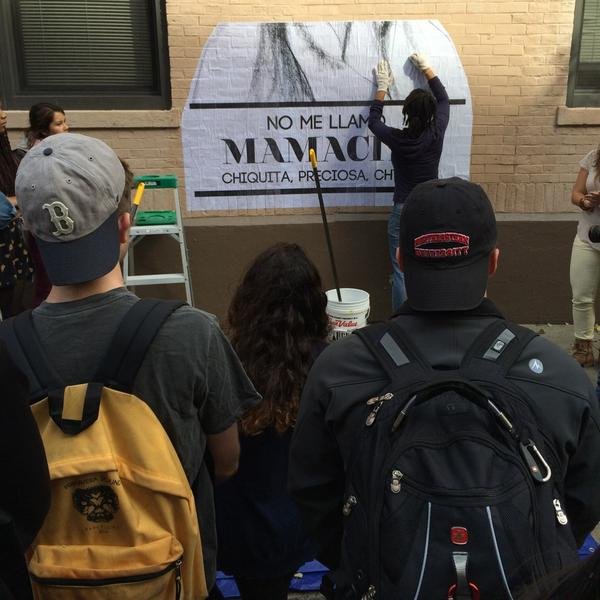
“Mamacita” literally means “little mama” but a closer translation would be “sexy girl” or “sexy woman.”
¡Ella es una mamacita!
She is a sexy girl!
How To Say To Catcall In Spanish
By the way, in Colombia the verb for to “catcall” is “silbar” which literally means “to whistle. A “señorita” from Mexico told me that in Mexico the verb for catcalling is “chiflar.” And in some other Spanish speaking countries the verb for catcalling is “piropear.” But in any Spanish speaking country, I am sure that catcalling is considered “acoso verbal” (verbal harassment) of women.